The Balogun Case: How a World Cup Red Card Became a Test of FIFA's Independence
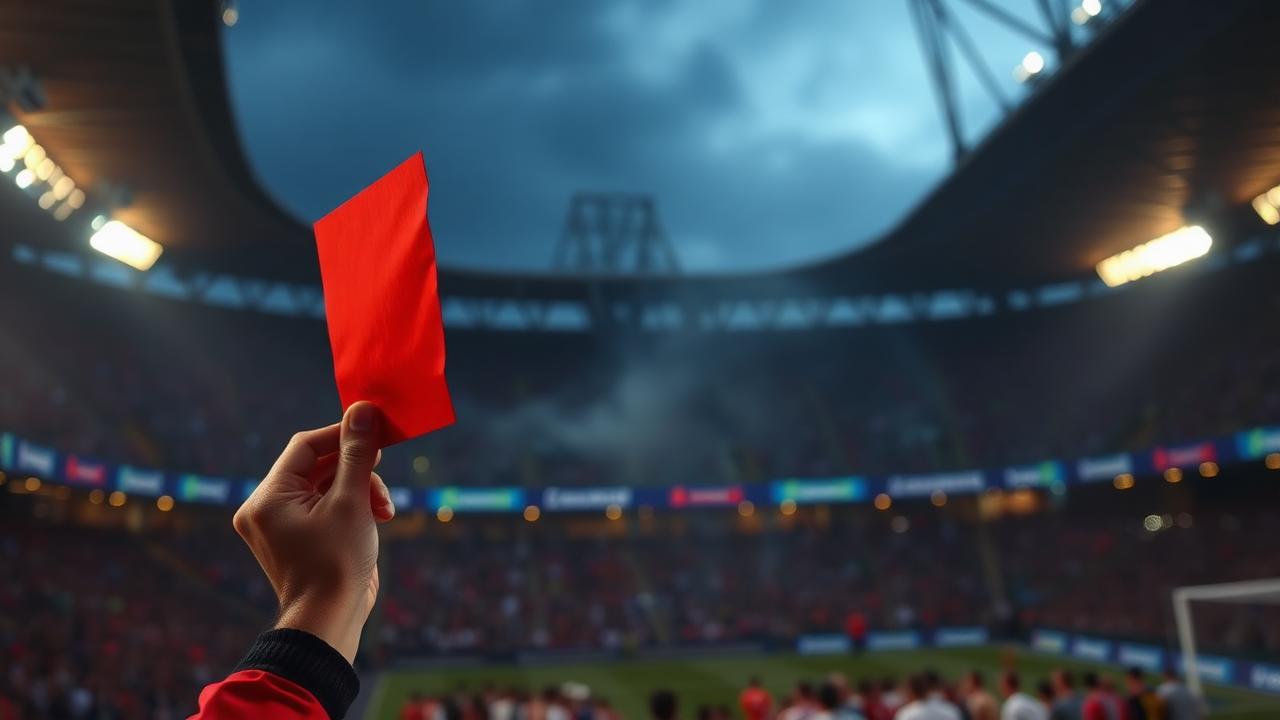
The 2026 FIFA World Cup has already produced goals, drama and a new level of North American attention. But one of the tournament's most important moments may not be remembered for what happened on the pitch. It may be remembered for what happened after a red card.
Update: Belgium formally appeals and contests Balogun's eligibility
In an updated statement published shortly before kickoff, the Royal Belgian Football Association (RBFA) confirmed it had lodged a formal appeal with FIFA's Appeal Committee and was formally contesting Balogun's eligibility for the round-of-16 match. FIFA appointed an arbitrator to rule on the case, turning the dispute into a race against time before the game at Seattle's Lumen Stadium.
The RBFA said it remained “astonished” by the decision to declare a suspended player eligible. It pointed to Article 66.4 of the FIFA Disciplinary Code and Article 10.5 of the FIFA World Cup 2026 Competition Regulations, arguing that a red card automatically results in a one-match suspension “as has been the case for all previous red cards issued during this FIFA World Cup.” The association added that the same rule is repeated at every pre-match Match Coordination Meeting and in FIFA's own tournament workshops.
Crucially, the federation said that hours before the match it had “still not received a decision or any clarification from FIFA” and therefore felt “compelled to formally contest the eligibility of the player.” It vowed that, regardless of the sporting outcome, it would keep working “in the coming hours, days and months” to defend the principles of ethics, fair competition and the interests of football, and said it was “investigating all potential options” for this tournament and future editions.
Folarin Balogun, the United States striker and one of the breakout stars of the tournament, was sent off during the USA's win over Bosnia and Herzegovina. Under normal tournament rules, a red card brings an automatic one-match suspension. That should have ruled him out of the United States' round-of-16 match against Belgium.
Instead, FIFA suspended the implementation of the ban for a one-year probationary period, allowing Balogun to play. The decision matters for bettors too, because so much World Cup wagering now rides on individual players and data-driven markets.
That decision has turned a refereeing controversy into a governance crisis.
According to reporting cited by several international outlets, US President Donald Trump personally called FIFA president Gianni Infantino to request a review of Balogun's suspension. FIFA has maintained that outside intervention did not influence the disciplinary outcome, pointing instead to its independent committee process. But the timing, the political pressure and the rarity of the decision have created a storm around the tournament.
UEFA's response made the case more significant. European football's governing body did not issue a cautious diplomatic note. It accused FIFA of crossing a “red line” and called the decision “incomprehensible and unjustifiable.” For UEFA to challenge FIFA so directly during a World Cup is highly unusual. For it to do so on a disciplinary matter involving the host nation's leading striker is almost unprecedented.
This is no longer only about whether Balogun deserved a red card. It is about whether World Cup rules apply equally when sporting, political and commercial pressure collide.
What happened?
Balogun was sent off in the United States' knockout match against Bosnia and Herzegovina after a challenge on defender Tarik Muharemovic. The referee reviewed the incident with VAR and showed a red card. The USA still won 2-0, but the dismissal triggered an automatic suspension for the next match.
That next match was not just any fixture. It was a World Cup round-of-16 tie against Belgium, one of the strongest remaining European sides.
Balogun's importance to the USA made the decision politically and commercially explosive. He had already scored three goals in the tournament and had become central to the American attack. Removing him from the Belgium match would have materially weakened the co-host nation at the most visible point of its campaign.
At first, the expectation was simple. Red card. One-match ban. No Balogun against Belgium.
Then FIFA changed course.
FIFA cited Article 27 of its disciplinary code, which allows the implementation of a disciplinary measure to be suspended. Balogun's one-match ban was not erased entirely, but its enforcement was suspended for one year. If he commits a similar offence during the probation period, the sanction can be revived.
That legal technicality may satisfy FIFA's internal process. It has not satisfied UEFA, Belgium or many neutral observers.
Why the Trump call matters
The case became far more serious because of the reported White House involvement.
The New York Times reported that Trump called Infantino to ask for a review of Balogun's suspension. Other outlets, including Le Monde and Larry Brown Sports, also reported or cited the intervention. Larry Brown Sports noted that FIFA insisted the president's involvement was not a factor in the decision.
That distinction is important.
It is one thing for fans, coaches or national federations to complain about a red card. That happens at every major tournament. It is another for the head of state of a host country to contact the FIFA president directly about a disciplinary case involving that country's national team.
Even if FIFA's committee acted independently, the optics are damaging.
The 2026 World Cup is being co-hosted by the United States, Canada and Mexico. FIFA is commercially invested in the success of the tournament. The United States is the largest host market and one of FIFA's most important growth territories. The US team advancing deep into the tournament is valuable for television audiences, ticket demand, sponsorship visibility and political attention.
That does not prove interference. It does explain why the perception of interference is so powerful.
In global sport, independence does not only have to exist. It has to be visible.
UEFA's reaction was the real earthquake
The most remarkable part of the case is not FIFA's decision. FIFA has often been accused of opaque governance. The remarkable part is UEFA's response.
UEFA stated that the decision to suspend Balogun's automatic one-match ban “crossed a red line.” It argued that a minimum suspension after a red card is not a discretionary option and warned that FIFA's decision threatens the integrity and credibility of the competition.
That language is extraordinary.
UEFA is not a small federation complaining from the outside. It is the most powerful confederation in world football. It represents the European game, many of the richest clubs, most of the elite leagues and a large share of the players at the World Cup.
When UEFA publicly accuses FIFA of undermining the certainty of rules during its own tournament, it signals a deeper institutional fracture.
This is why the statement is groundbreaking. UEFA was not only defending Belgium. It was defending the principle that disciplinary rules cannot be adjusted mid-tournament in a way that appears to benefit one team. Its argument is that the World Cup depends on predictability. If players in similar situations served their suspensions earlier in the tournament, Balogun should not receive a different outcome without an exceptional and transparent explanation.
That goes to the heart of competitive integrity.
Belgium's position
Belgium's anger is easy to understand.
The Royal Belgian Football Association was preparing for a knockout match against the United States without Balogun. Then, shortly before the game, FIFA's disciplinary process made him available again.
According to The Guardian, Belgium was granted the right to appeal the ruling, but there was no guarantee that a decision would come before the match. The same report said the Belgian federation had not received FIFA's full reasoning and had effectively been forced to appeal without clarity.
That is a serious procedural issue.
In elite sport, appeals are already difficult because time is short. But an appeal process becomes almost meaningless if the affected federation does not have a clear written explanation before the match takes place.
Belgium's complaint is therefore not only sporting. It is procedural.
The issue is not simply “we want Balogun banned.” It is “we do not understand how FIFA has justified an exception to a rule that everyone else had to follow.”
That is a stronger argument.
The problem with Article 27
FIFA's reference to Article 27 may be legally available, but that does not end the controversy.
Disciplinary codes often give governing bodies discretion. That discretion exists for unusual cases. It allows committees to consider context, proportionality and exceptional circumstances. Without discretion, every rule becomes mechanical.
The problem is that discretion becomes dangerous when it is used without transparent reasoning.
If FIFA can suspend the implementation of an automatic red-card ban, the obvious question is: when else can it do so?
If Balogun's case qualified, why not previous red-card cases in the same tournament? If a similar red card occurs later, must FIFA now offer the same treatment? If it does not, what makes Balogun different?
UEFA's statement focused on exactly this point. It warned that the decision creates a precedent and that similar situations may now require equal treatment.
That is the governance problem. FIFA may have solved one sporting controversy, but it created a larger legal and political one.
Why this matters for bettors
For sports bettors, the Balogun case is not only a football politics story. It is a market integrity story.
Player availability directly affects betting markets. A star striker's suspension changes match odds, player props, goal-scorer markets, same game parlays and futures markets. When a player is unexpectedly reinstated after markets have already moved, bettors and sportsbooks are forced to react.
The World Cup is one of the largest betting events in global sport. Balogun's availability against Belgium would influence pre-match pricing, live betting strategy and individual player markets. If bettors placed wagers based on the assumption that he was suspended, the reversal could materially affect the value of those bets.
This is why disciplinary transparency matters in betting. It is not just an internal football issue. It affects market confidence.
Sportsbooks can adjust odds quickly. Bettors do not always have the same information at the same time. When a high-profile decision appears sudden, political or unexplained, it creates an information imbalance.
For a betting audience, the lesson is clear: disciplinary cases, appeals and governing-body decisions can move markets as much as injuries or tactics.
Why it matters for the World Cup
The World Cup depends on a basic promise: different teams, same rules.
That promise is especially important in a 48-team tournament hosted across three countries, with enormous commercial and political stakes. Smaller nations already worry that major football powers receive softer treatment. A case involving the host country's star forward, a direct presidential intervention and an exceptional disciplinary outcome feeds that suspicion.
Even if FIFA believes its decision was correct, the process has damaged trust.
A red-card suspension is one of football's clearest disciplinary rules. Fans understand it. Players understand it. Coaches understand it. If that rule can be suspended in the middle of the knockout stage, the governing body has to explain why in detail.
A brief reference to an article of the disciplinary code is not enough.
The credibility of a tournament is not protected by saying the rules were followed. It is protected by showing how and why the rules were applied.
FIFA and Infantino under pressure
The controversy also puts Gianni Infantino in a difficult position.
Infantino has built FIFA's modern strategy around expansion, global growth and close relationships with political leaders. The 2026 World Cup is the largest tournament in history and a major test of FIFA's ability to operate across North America.
But the Balogun case shows the risk of proximity to power.
When a political leader calls about a sporting case and the governing body later makes a favourable decision, people will connect the two events. They will do so even if the disciplinary committee was independent. They will do so even if the red card was harsh. They will do so because global sport has a long history of opaque governance.
FIFA's challenge is therefore not only to defend the decision. It must defend the independence of the process.
That is much harder.
The sporting argument for Balogun
There is another side to the story.
Many American fans, players and commentators believed Balogun's red card was harsh. US coach Mauricio Pochettino argued that the decision was unfair and that the USA had already been punished by playing with 10 men against Bosnia and Herzegovina.
That view matters. This is not a case where everyone agrees Balogun committed a violent offence. The original red card was controversial. The challenge was reviewed, debated and interpreted differently by supporters and analysts.
If FIFA had published a detailed explanation saying the sanction was disproportionate because of the specific nature of the incident, the debate might have been different.
But that is not what has driven the backlash.
The backlash is not only about whether Balogun deserved to miss Belgium. It is about whether FIFA created an exception after political pressure from the host nation.
That is the difference between a refereeing debate and a governance crisis.
The precedent problem
The most dangerous part of the case is the precedent.
Every future red card in the tournament now carries a question: can the ban be suspended?
Every federation whose player misses a match may ask why Balogun was treated differently. Every coach facing an important suspension may argue for equal treatment. Every fan base may search for political, commercial or sporting reasons why one player was spared and another was not.
That is exactly what UEFA warned about.
Rules in tournament football are valuable because they reduce argument. They create certainty. A red card means the player misses the next match. Teams may dislike the rule, but they know it applies.
Once exceptions appear, the rule becomes negotiable.
That does not mean FIFA can never use discretion. It means discretion has to be rare, reasoned and transparent.
The Balogun case may have been rare. It has not been transparent enough.
Why UEFA's move is bigger than Belgium
UEFA's statement should not be read only as support for Belgium.
It is also a political message to FIFA.
European football has repeatedly clashed with FIFA over the global calendar, player workload, competition expansion, club power and governance. The Balogun case gives UEFA an opportunity to frame itself as the defender of football's rule-based order against FIFA's discretionary power.
That framing matters.
FIFA controls the World Cup. UEFA controls the Champions League and the strongest regional football economy in the world. When UEFA publicly questions FIFA's handling of a World Cup disciplinary decision, it exposes the tension between global authority and regional power.
The statement is therefore about more than one player.
It is about who gets to define fairness at the top of world football.
Final analysis
The Balogun case is one of the most important controversies of the 2026 World Cup because it sits at the intersection of sport, politics, governance and betting.
On the surface, it is about a red card. Underneath, it is about FIFA's independence.
If a player receives a red card, the usual expectation is automatic suspension. FIFA chose a different route. It may have had the legal power to do so. But the combination of presidential intervention, limited public reasoning and competitive impact has made the decision look bigger than the incident itself.
UEFA's response is what gives the story historical weight. By accusing FIFA of crossing a red line, UEFA has turned a disciplinary case into an institutional confrontation. That is rare. It is also revealing.
Football can survive controversial red cards. It can survive angry coaches and disputed VAR decisions. What it cannot easily survive is the belief that rules bend for political power, commercial pressure or host-nation importance.
That is why the Balogun case matters.
The question is not only whether the USA should have had its striker available against Belgium. The question is whether the World Cup can still convince everyone that the same rules apply to every team.
Responsible gambling note: Sports betting should be treated as entertainment, not income. Player availability and disciplinary decisions can change markets quickly, so only bet with money you can afford to lose and set limits before you play.
Sources
This article was prepared using official Canadian legal, regulatory and provincial gambling sources, including:
- 1RBFA: Update statement regarding Folarin Balogun
The Royal Belgian Football Association's updated statement confirming its appeal and formal contestation of Balogun's eligibility.
- 2UEFA statement on the Balogun case
UEFA's official statement accusing FIFA of crossing a red line by suspending Balogun's automatic one-match ban.
- 3The New York Times: Trump, FIFA and the Balogun World Cup controversy
Reporting that US President Donald Trump called FIFA president Gianni Infantino to request a review of Balogun's suspension.
- 4The Guardian: Trump lobbied FIFA to lift Folarin Balogun suspension
Coverage of the reported political lobbying and FIFA's decision to lift the striker's red-card suspension before the Belgium match.
- 5The Guardian: UEFA accuses FIFA of crossing a red line over Balogun case
Report on Belgium's appeal and UEFA's rebuke of FIFA over the lifting of Balogun's ban.
- 6AP News: FIFA lifts Balogun's red card suspension after Trump calls Infantino
Associated Press reporting on FIFA's decision and the reported call from the US president.
- 7Le Monde: 2026 World Cup Balogun suspension overturned after Trump intervention
Le Monde's account of the suspension being overturned following the reported intervention.